TREE PLANTING TO ENCOURAGE ECOTOURISM CONCEPT IN KOPENG VILLAGE
PKM PENANAMAN POHON UNTUK MENDORONG KONSEP EKOWISATA DI DESA KOPENG
DOI:
https://doi.org/10.53067/ijecsed.v1i1.1Keywords:
Kopeng, Planting, Trees, Ecotourism, Penanaman, Pohon, EkowisataAbstract
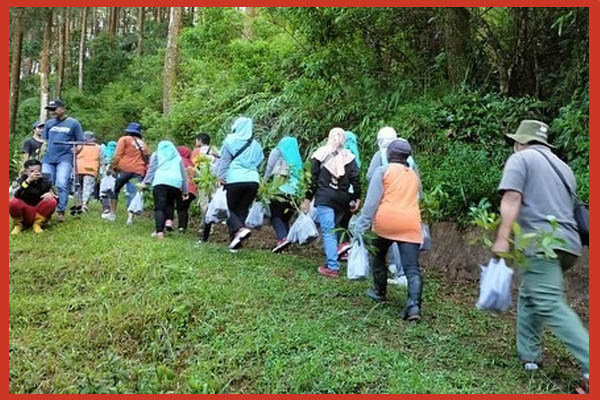
Kopeng Village is one of the Vocational Villages in the Getasan Subdistrict. The problems faced by Kopeng Village include the reduction of water catchment areas due to the transfer of land functions into settlements. This is because the tourism sector began to develop and encouraged high physical development such as homestays, housing, and supporting infrastructure. Agricultural activities also tend to change the hue of nature. Many trees that are located in the fields must be cut down not to block the sunlight. As a result, rainwater also cannot be absorbed into the ground but flows to the surface. Also, Kopeng is vulnerable to landslides. This is because the village's location is in the highlands, and the amount of critical land scattered. Also, the critical land is not covered with plant vegetation, so it is prone to landslides in the rainy season. Many critical lands are located very close to residential areas and are instead used as agricultural land. This condition is undoubtedly dangerous for the safety of residents. Moreover, Kopeng village becomes one of the tourist villages, so disaster mitigation should always take precedence. A lot of vacant lands are also untapped. Whereas if used, adding coverage of green areas is also beneficial for the community's welfare through the results of the tree. Therefore, the greening movement in Kopeng village needs to be one of the urgent programs to be carried out immediately. So that later indirectly will support the existing role as a vocational village and tourist village. The planted plant is a type of annual perennial, considering the fruit commodity is not so good when planted in the highlands. Other than that, the perennial has a solid rooting system and the ability to instigate oxygen. Some commodities that can be planted include fir, red shoots, Dutch teak, and acacia. The selection of perennials is expected to produce wood in the next few years and supply oxygen to strengthen kopeng village as an ecotourism area
Downloads
References
Austin, J.E. 1981. Agroindustrial Project Analysis. The John Hopkins UP. London Bekar C, Lipsey RG. 2001. Cluster and Economi Policy. Paper presented at Policies for the New Economy. Montreal.
BPS. 2014. Produk Domestik Regional Bruto Kota Semarang 2014. Semarang: BPS
Doeringer PB, Terkla DG. 1995 . Business Strategy and Cross Industry Clusters. Economic Development Quarterly : 9 : 22537.
Enright M.J, 1999. The Globalization of Competition and the Localization of Competitive Advantage: Policies Toward Regional Clustering di dalam: Hood.
Hartmann C. 2002. Styria. Didalam : Raines P, editor. Cluster Development and Policy. Chippenham, Wiltshire : Antony Rowe Ltd. hlm 123-140.
Margunani, Etty Soesilowati dan Dyah Maya Nihayah 2012, Pemetaan Potensi Ekonomi Tanaman Hortikultur Sebagai Komoditas Unggulan Di Gunungpati, Kota Semarang, Laporan Penelitian, UNNES, 2012.
Murwatiningsih, 2009, Analisis Pengaruh Persepsi Kualitas Jasa Layanan Pariwisata Terhadap Keputusan Kunjungan Wisatawan Di Kota Semarang, Laporan Penelitian, UNNES, 2009
Murwatiningsih. Dyah Maya Nihayah and Shanty Oktavilia. 2013. Competitiveness of Leading Commodities to Support Developing Region of Agrotourism. Economics Journal and Emerging Market (EJEM). Vol 2 October 2013, Universitas Islam Indonesia, Yogyakarta
Nihayah, Dyah Maya, 2011, Ekspor Produk Unggulan Sektor Agroindustri Menuju Free Trade Area: Kinerja dan Proyeksi, Laporan Penelitian, LP2M UNNES.
Nihayah, Dyah Maya, 2012, Strategi Pengembangan Agrobisnis Tanaman Buah Untuk Mendukung Percepatan Gunungpati Sebagai Kawasan Agrowisata di Kota Semarang, Prosiding Seminar Nasional dan Call For Paper, ISBN 978-602-17035-0-5, Jurusan Ekonomi Pembangunan, UNNES.
PP No. 69, tahun 1999 tentang Pangan
Tim KKN Undip. 2017. Profil Wilayah Desa Kopeng. Laporan KKN
Watanabe, M., Jini, N., dan Kurihara, M., 2009, Is the development of the agro-processing industry pro-poor ?: The case of Thailand, Journal of Asian Economics 20 (2009) pp : 443–455
Downloads
Published
How to Cite
Issue
Section
License
Copyright (c) 2021 Indonesian Journal of Engagement, Community Services, Empowerment and Development

This work is licensed under a Creative Commons Attribution-NonCommercial-ShareAlike 4.0 International License.