MENUMBUHKAN BUDAYA HIDUP SEHAT SEKALIGUS MEMBERDAYAKAN MASYARAKAT MELALUI PRODUKSI MINUMAN HERBAL YANG BERNILAI EKONOMI
DOI:
https://doi.org/10.53067/ijecsed.v3i2.115Keywords:
Entrepreneur, Herbal medicine, Healthy living culture, Microgreen Technique, Entrepreneurship, Community EmpowermentAbstract
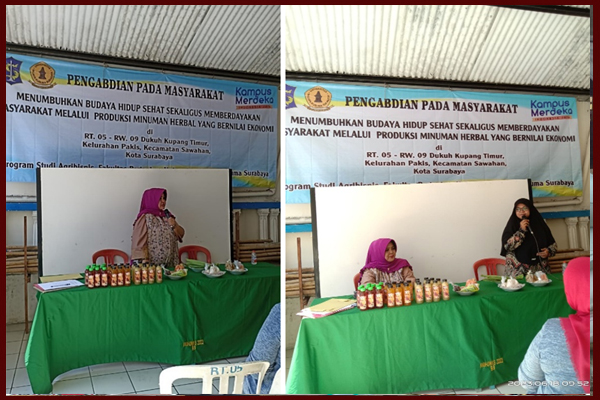
Community Service Activities (PKm) are carried out in the area of RT 05 RW 9 Dukuh Kupang Timur, Pakis Village, Sawahan District, Surabaya City with the theme: GROWING A HEALTHY LIVING CULTURE WHILE EMPOWERING COMMUNITIES THROUGH THE PRODUCTION OF HERBAL DRINKS WITH ECONOMIC VALUE. PKm activities aim to motivate the community to live healthy by consuming herbal drinks, as well as being used as a business field, especially for people affected by the Covid 19 pandemic changing their status to beneficiary families. Through this activity the community gains knowledge and skills in producing various kinds of healthy herbal drinks and implementing them as economically productive activities. The objectives of this activity are: a) Motivate the community to have a culture of healthy living. b) Transferring science and technology through counseling activities and entrepreneurship assistance by producing healthy herbal drinks that have economic value. c) Growing innovative and sustainable new entrepreneurs. Activity planning is prepared in a bottom-up manner by applying participatory methods, namely the PRRA and RRA methods, so that the target can synergize with the implementing team in terms of planning, organizing, implementing and evaluating the implementation of these activities Community very enthusiastic which was shown by his enthusiasm to participate in the activity and practice making the healthy drink Secang, Turmeric Tamarind, Rice Kencur, Sinom
Downloads
References
SitiNurAeni. https://katadata.co.id/sitinuraeni/berita/621d93b5cc22d/memahami-pengertian-pola-hidup-sehat- hingga-penerapannya.
Astawan M. (2011). Pangan Fungsional untuk Kesehatan yang Optimal. Fakultas Teknologi Pertanian IPB, Bogor.
Ayipey, P. (2020). Impact of Covid-19 onginger export, a root crop as traditionalremedy for Covid-19. Journal of Basic and Applied Research in Biomedicine, 6(1), 25–31
Badan POM. (2020). Pedoman penggunaanherbal dan suplemen kesehatan dalammenghadapi COVID-19 di Indonesia.BPOM RI
Edy, S., & Ajo, A. (2020). Pengolahan jahe instan sebagai minuman herbal di masa pandemik COVID - 19. Jurnal Ekonomi, Sosial, Dan Humaniora, 2(3), 177–183.
Hasanah, S. U., Wibowo, D. P., & Aulifa, D.L. (2020). Lindungi imunitas masyarakat dengan minuman herbal. CARADDE: Jurnal Pengabdian Kepada Masyarakat, 3(2), 212–218
Herawati, J., Indarwati, dan Sophie, T.H. (2020). Manfaat dan Potensi Jahe Sebagai Sumber Pangan Fungsional. Jurnal Humaniora, Sains, dan Pengajaran INOVASI. ISSN 0854- 4328.
Kusumo, A. R., Wiyoga, F. Y., Perdana, H. P., Khairunnisa, I., Suhandi, R. I., & Prastika, S. S. (2020). Jamu tradisional Indonesia: Tingkatkan imunitas tubuh secara alami selama pandemi. Jurnal Layanan Masyarakat (Journal of Public Services), 4(2), 465. https://doi.org/10.20473/jlm.v4i2.2020 .465-471
Suter, I.K. 2013. Pangan Fungsional dan Prospek Pengembangannya. Seminar Sehari”Pentingnya Makanan Alamiah (Natural Food) Untuk Kesehatan Jangka Panjang” Jurusan Gizi Politeknik Kesehatan. Denpasar.
Downloads
Published
How to Cite
Issue
Section
License
Copyright (c) 2023 Erna Haryanti, Dwie Retna Suryaningsih, Koesriwulandari, Ristani Widya Inti, Dewa Putra Prassuwito, Agustina Dwi Kartika

This work is licensed under a Creative Commons Attribution-NonCommercial-ShareAlike 4.0 International License.